An AMD patent application for a new spin on has been spotted. The so-called high-bandwidth dual inline memory module or HB-DIMM is designed to boost memory bandwidth courtesy of pseudo channels, buffer chips and intelligent signal routing. It looks very fancy, but we'll take some convincing it'll appear in PCs any time soon.
Uncovered by , the explains that modern computing platforms have ever greater memory bandwidth rummy new app requirements.
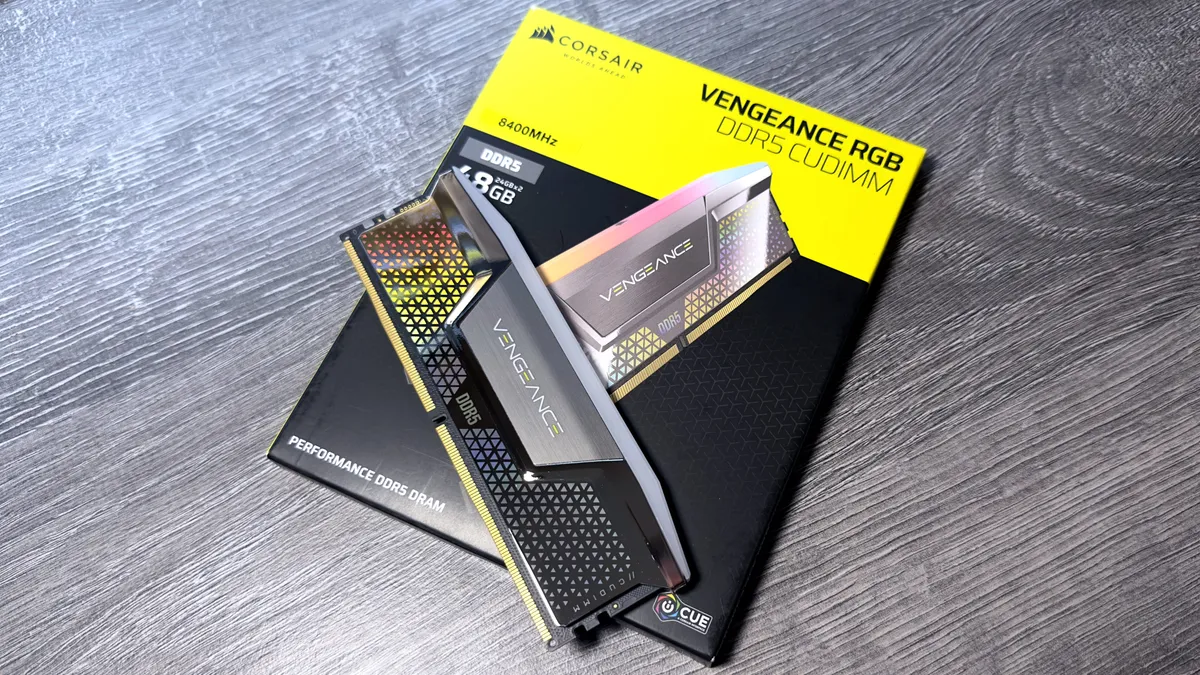
If our understanding is correct, it's a little like having a dual-channel memory interface on a single memory DIMM. Whatever, the net result, in practical terms, is a doubling of the headline 6.4 Gbps native dagta rate of DDR5 to fully 12.8 Gbps. Of course, the clever bit is that this is all achieved using existing DDR5 memory chips. A new generation of silicon is not required.
What is presumably required, on the other hand, are CPUs, chipsets and motherboards to support this new HB-DIMM and that hardly seems like a given. Proprietary memory standards don't have much of a track record when it comes to gaining traction in the PC.
As the patent filing itself says, "most DRAM chips sold today are compatible with various double data rate (DDR) DRAM standards promulgated by the Joint Electron Devices Engineering Council (JEDEC)." For the PC, you can pretty much swap out "most" for "all."
So, the question is what chance this new standard has of being adopted. One obvious route would be to have JEDEC adopt it and make it essentially free to use. It's certainly hard to imagine Intel paying AMD for access. And as much as Intel has been struggling of late, it remains the largest player in PC platforms. So, you'd think Intel would have to be onboard for HB-DIMM to be a goer.
1. Best DDR5 overall:
2. Best budget DDR5:
3. Best high-capacity DDR5:
4. Best DDR4 overall:
5. Best budget DDR4:
6. Best high-capacity DDR4:
👉👈